By Dr Dawn Harris | 30 October 2025
The Neuroscience of Clarity — How Pressure Rewires Your Focus
Have you ever noticed how, when pressure increases, your world starts to narrow?
Emails blur together. Decisions feel harder to make quickly. Conversations take more effort.
Whilst some may refer to this as “weakness” — it’s best explained through neuroscience.
When the brain is exposed to constant demands — relentless emails, back-to-back meetings, complex decisions, family pressures, and the daily noise of modern life — it begins to restructure what it pays attention to.
You stop noticing nuance and start responding to noise.
You give more weight to whoever shouts loudest, whoever feels most threatening, and whatever demands urgency.
When the brain tires, clarity will fade.
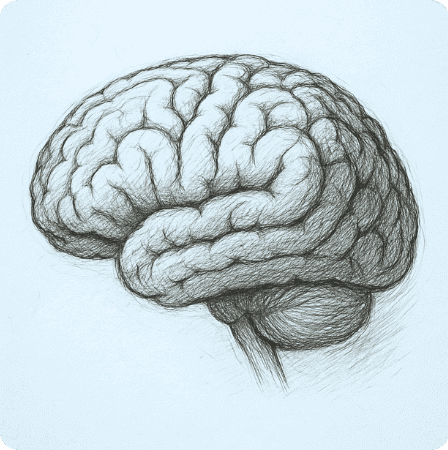
As neuroscience research from Yale University shows (Arnsten, 2009), the prefrontal cortex — the region responsible for planning, decision-making, empathy, and emotional regulation — begins to tire under prolonged stress.
You find it harder to concentrate, your thinking slows, and empathy decreases.
Your brain and mind narrow your attention to help conserve energy and survive increasing demands around you.
But clarity starts to fade:
- Tasks take longer.
- You lose patience with others.
- Sleep is disrupted.
- You feel more irritated at others.
- Decisions start to feel reactive rather than intentional.
This is what psychologists refer to as decision fatigue — your brain’s warning light that it’s running low on cognitive fuel (Harvard Health Publishing, 2023).
Why quick fixes don’t last
Mindfulness, meditation, or short breaks can offer temporary relief.
After a few days — sometimes hours — the fog creeps back in.
Because while these methods help you cope with stress, they don’t change the underlying neural patterns driving it (McEwen & Gianaros, 2011).
The neuroscience of recalibration
Long-term clarity requires more than rest — it needs neural repatterning.
At Kedras, we help leaders retrain their brains to restore calm, clarity, and focus under pressure.
Using evidence-based neurofeedback and attentional retraining, we strengthen the brain’s ability to shift from reactivity to regulation — improving decision quality, leadership composure, and cultural impact.
As highlighted by Harvard Business Review, the most effective leaders are not those who simply manage time — they manage attention (Goleman, 2013).
Our clients report:
–Clearer thinking and faster decision-making
-More stable mood and energy
-Better sleep and focus
-Greater emotional control in high-pressure environments
Clarity is a necessary leadership skill
When you regain clarity, everything changes — your decisions, your relationships, your results.
If you’re ready to reset your focus, calm your mind, and regain your clarity under pressure, we invite you to book a confidential consultation.
References
- Arnsten, A. F. T. (2009). Stress signalling pathways that impair prefrontal cortex structure and function. Nature Reviews Neuroscience, 10(6), 410–422.
- McEwen, B. S., & Gianaros, P. J. (2011). Stress- and allostasis-induced brain plasticity. Annual Review of Medicine, 62, 431–445.
- Goleman, D. (2013). The Focused Leader. Harvard Business Review.
- Davidson, R. J., & McEwen, B. S. (2012). Social influences on neuroplasticity: Stress and resilience. Nature Neuroscience, 15(5), 689–695.
- Harvard Health Publishing (2023). Decision fatigue: Why it happens and how to fight it.